Beyond Iron+ · Human research plannedJoin Study

Women + Iron

Iron needs change. The questions we ask should, too.

From monthly cycles to pregnancy and changing needs later in life, iron matters. So does understanding what the body actually absorbs.

Different bodies. Different chapters. Better-informed choices.

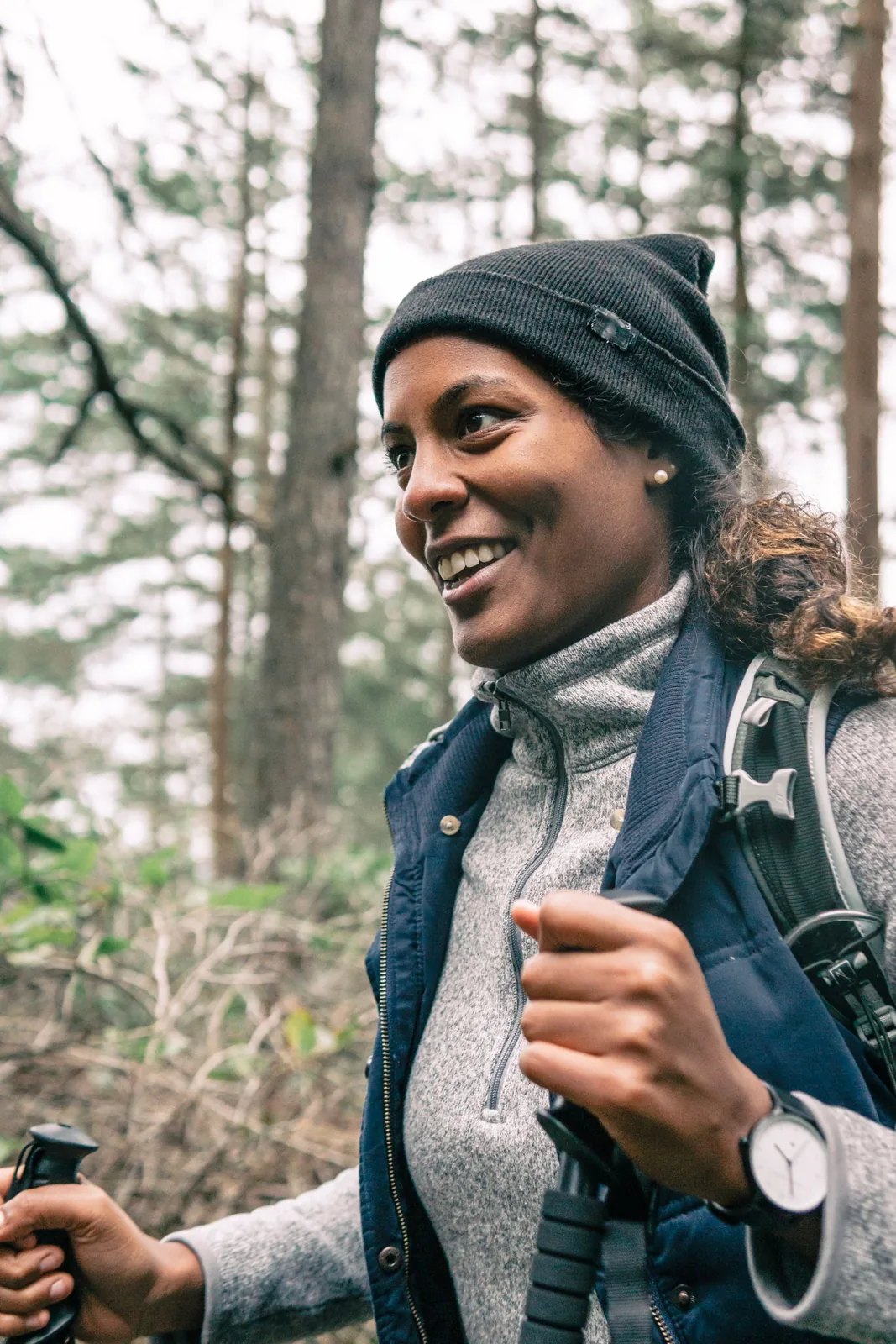
A smiling woman wearing a knit hat and backpack holds trekking poles on a forest walk
Photo: PNW Production / Pexels (opens in a new tab)

The numbers need context

Low iron. A bigger conversation.

Iron deficiency · U.S. females aged 12–21
38.6%

NHANES 2003–2020 analysis, reported in JAMA (2023); ferritin below 25 μg/L was the research definition.

Heavy menstrual bleeding · U.S. women
1 in 5

CDC estimate of heavy periods—not iron deficiency. Ongoing blood loss can put iron stores under pressure.

Anaemia · Global women aged 15–49
30.7%

WHO 2025 estimates for 2023. This measures anaemia from all causes, not iron deficiency alone.

Anaemia · Global pregnant women aged 15–49
35.5%

WHO 2025 estimates for 2023. Pregnancy-specific anaemia prevalence, not a measure of iron deficiency.

These figures describe different populations, time windows and measures; they are not directly comparable. Iron deficiency means depleted iron stores, while anaemia means low haemoglobin and can have several causes.

In the same U.S. adolescent analysis, iron-deficiency anaemia affected 6.3%—a separate finding that helps show why low iron stores and anaemia are not the same thing.

Small mineral. Essential work.

Oxygen is only the beginning.

Iron is part of haemoglobin, which carries oxygen in the blood, and myoglobin, which helps supply oxygen to muscles. It also supports normal cellular function.

Needs change with life stage, blood loss and health context. Feeling tired is a reason to ask questions—not a diagnosis of low iron.

Life is not one reference value

Different lives. Different iron needs.

Iron needs follow life, not a single label. These chapters can overlap—and not every woman menstruates, becomes pregnant or breastfeeds.

Adolescence

Growing bodies. Busy minds.

Growth and the onset of menstruation can raise iron demands. Iron deficiency, with or without anaemia, can affect concentration and learning; fatigue and reduced physical endurance can make school or sport harder.

The U.S. adolescent study above describes prevalence, not proof that low iron caused a particular student’s symptoms.

Evidence context: JAMA 2023 · NIH

Menstruating adulthood

Everyday energy has a context.

Regular menstrual blood loss contributes to iron needs. If deficiency develops, fatigue and reduced activity tolerance can affect work, exercise and everyday routines.

Heavy periods deserve evaluation, especially when they disrupt daily life. Finding the cause matters as much as replacing lost iron.

Evidence context: CDC · NIH

Pregnancy

Supporting two changing bodies.

Iron supports expanding maternal blood volume and fetal development. Iron-deficiency anaemia in pregnancy is associated with preterm delivery and low birthweight; these are associations, not outcomes established for Beyond Iron+.

The global pregnancy figure above covers anaemia from all causes. Prenatal care should guide testing and any supplementation.

Evidence context: NIH · WHO

Postpartum & breastfeeding

Recovery deserves attention, too.

Iron stores after pregnancy and blood loss during childbirth can shape recovery. Postpartum iron-deficiency anaemia can bring exhaustion, breathlessness and reduced wellbeing during an already demanding chapter.

The breastfeeding dietary reference is not a treatment dose for postpartum anaemia. Recovery needs depend on blood loss, iron stores and clinical assessment.

Evidence context: Cochrane 2024 · NIH

Perimenopause

Changing cycles. Overlapping symptoms.

Periods may become irregular or heavier, so iron loss can still matter. Fatigue and difficulty concentrating can overlap with sleep disruption and other changes at this stage; symptoms alone cannot identify anaemia.

Discuss new, unusually heavy or otherwise abnormal bleeding with a clinician rather than assuming it is simply part of the transition.

Evidence context: BC Guidelines · CDC

Postmenopause & later life

A new deficiency needs a reason.

Dietary reference intakes are generally lower from age 51, but new unexplained iron-deficiency anaemia is not a normal consequence of ageing. It warrants investigation for causes such as gastrointestinal blood loss or impaired absorption.

Age-based intake values assume menopause. They may not reflect the needs of someone who is still menstruating.

Evidence context: AGA · NIH
Dietary references · North America

Reference intakes—not prescriptions.

Girls aged 14–18
15mg/day

Not pregnant or breastfeeding

Women aged 19–50
18mg/day

Not pregnant or breastfeeding

During pregnancy
27mg/day

Pregnancy-specific reference

Breastfeeding, ages 19–50
9mg/day

Not a postpartum treatment dose

Adults aged 51+
8mg/day

Age-based; assumes menopause for women

North American Recommended Dietary Allowances (RDAs) describe total dietary intake for generally healthy people eating a typical mixed diet. They are not absorbed doses, diagnostic cutoffs or treatment doses, and do not by themselves recommend an iron supplement. Individual needs may differ, including for adults over 50 who still menstruate.

On the plate. In the body.

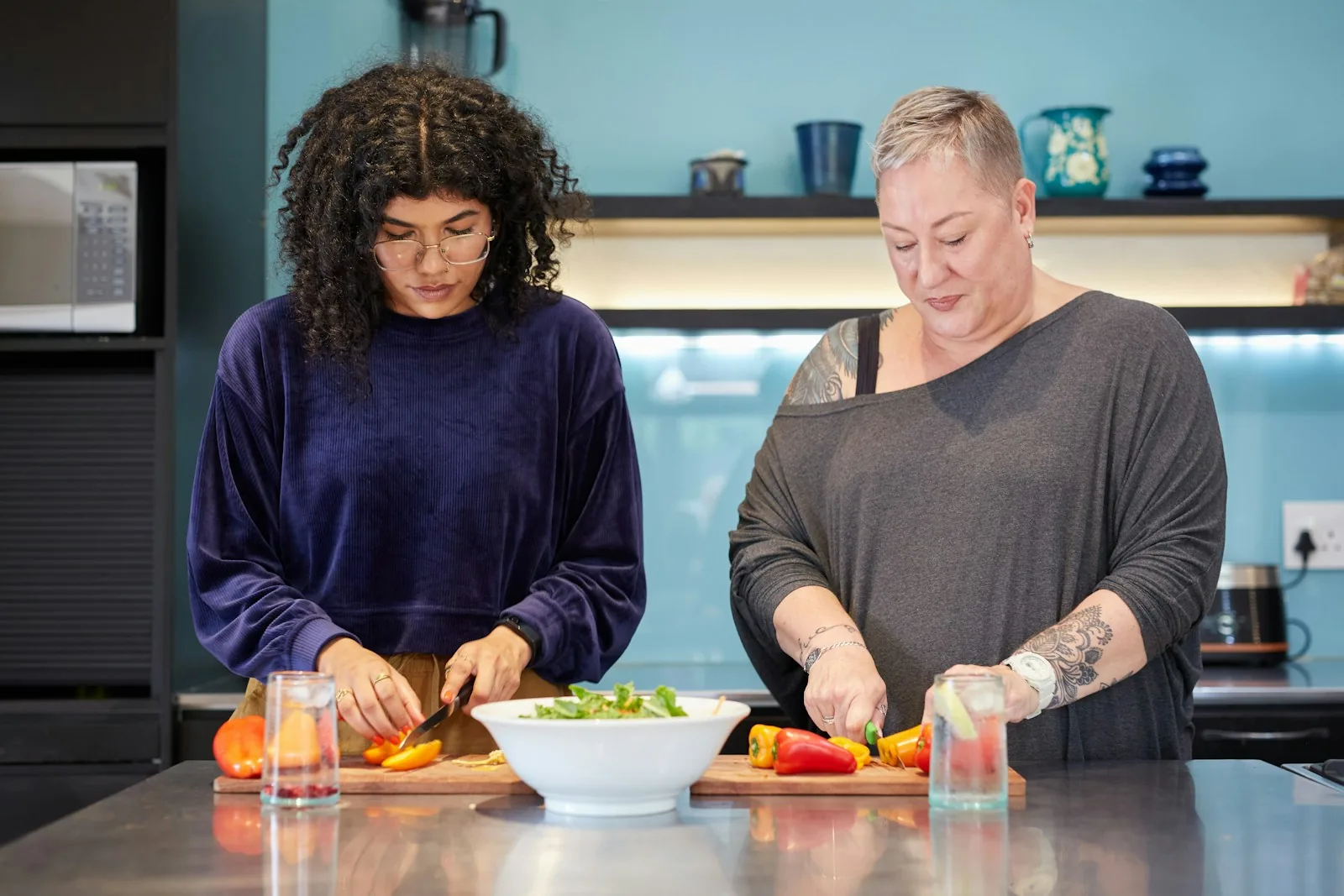
Two women prepare peppers and leafy vegetables together at a kitchen counter
Photo: Sweet Life / Unsplash (opens in a new tab)

What you take is not always what you absorb.

Iron form, the rest of a meal, iron stores and the body’s own regulation all influence uptake. A milligram on a label tells you the amount supplied, not the amount that reaches circulation.

Meat and seafood supply heme iron; beans, lentils and fortified foods supply nonheme iron. Vitamin C-rich foods can help the absorption of nonheme iron in a meal. Food choices and formulation both deserve context.

A question, not a self-diagnosis

What if iron is low?

Fatigue, weakness or reduced exercise tolerance can have many causes. A clinician can consider symptoms, dietary intake and possible blood loss, then decide whether testing is appropriate.

Ask what the tests can tell you.

A complete blood count (CBC), including haemoglobin, can help assess anaemia. Ferritin can help assess iron stores, but inflammation can raise it. These results need clinical interpretation together.

Find the cause. Tailor the response.

Low iron deserves evaluation, not just a higher dose. Whether supplementation is needed—and the formulation, dose and follow-up—depends on the person. Discuss pregnancy-specific care with your provider.

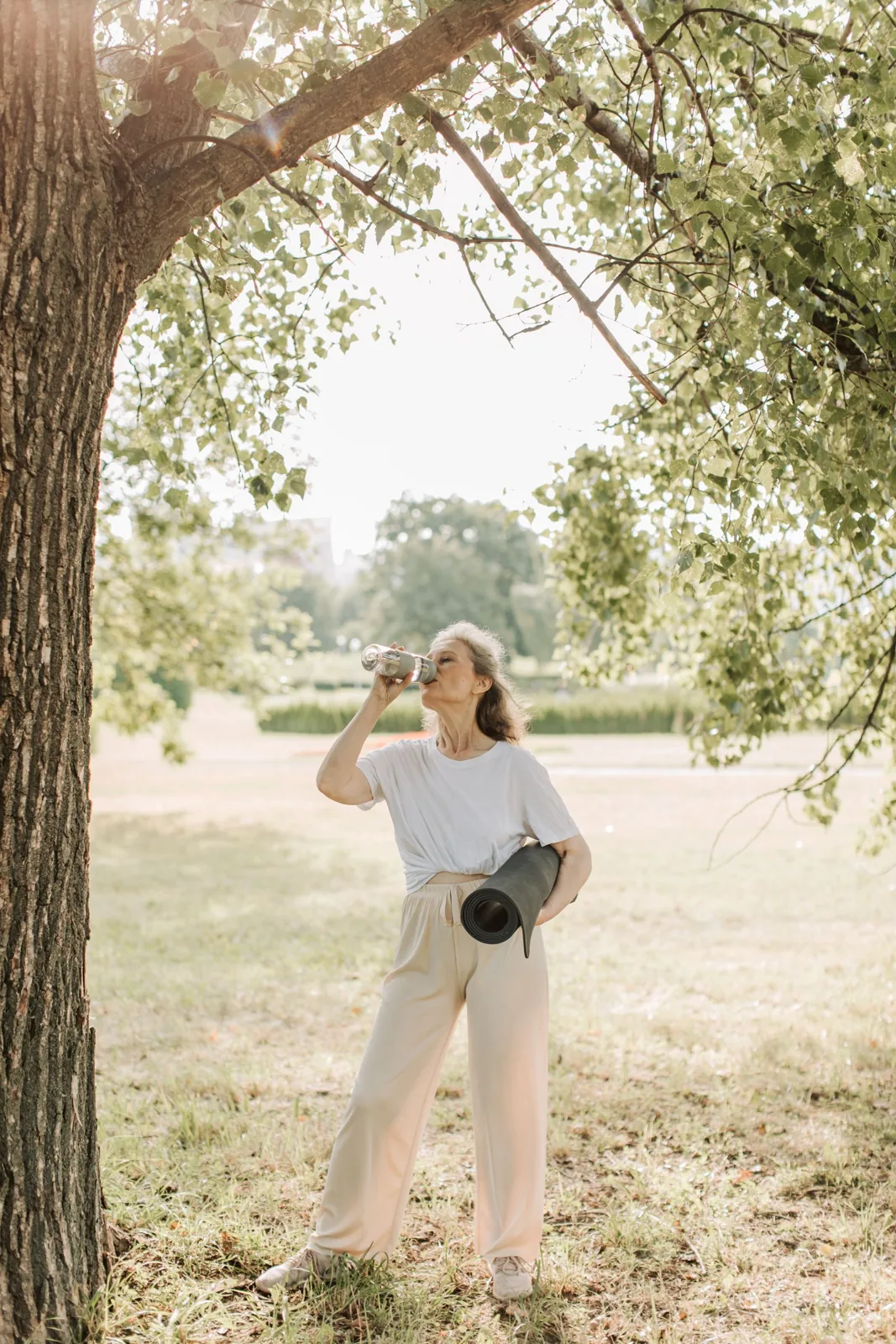
An older woman carrying a yoga mat drinks water beneath a sunlit tree in a park
Photo: Vlada Karpovich / Pexels (opens in a new tab)
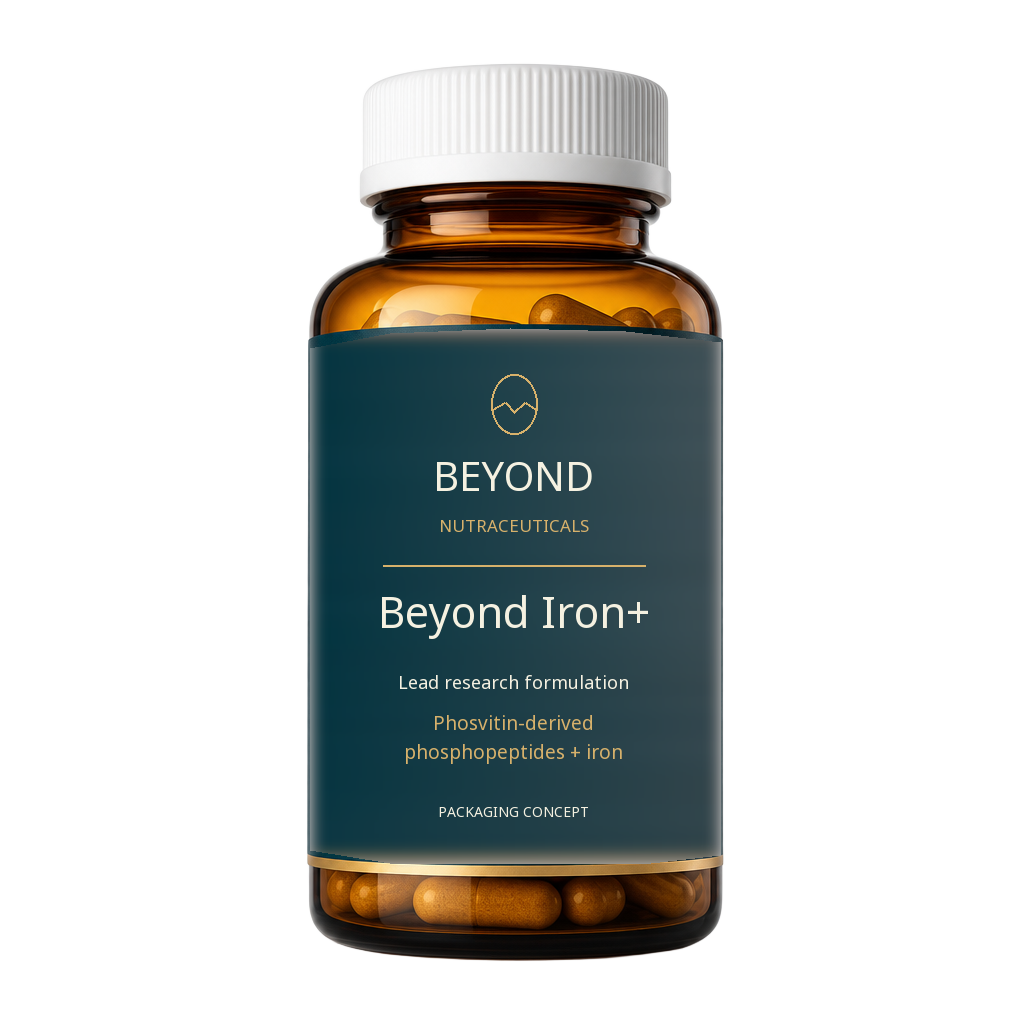
Recovered amber-glass bottle with white ribbed cap, dark-teal label and updated Beyond Iron+ concept branding
Illustrative packaging concept. Final formulation and label are in development.

Lead research formulation

Beyond Iron+

Phosvitin-derived phosphopeptides and iron. A formulation in development, with human validation ahead.

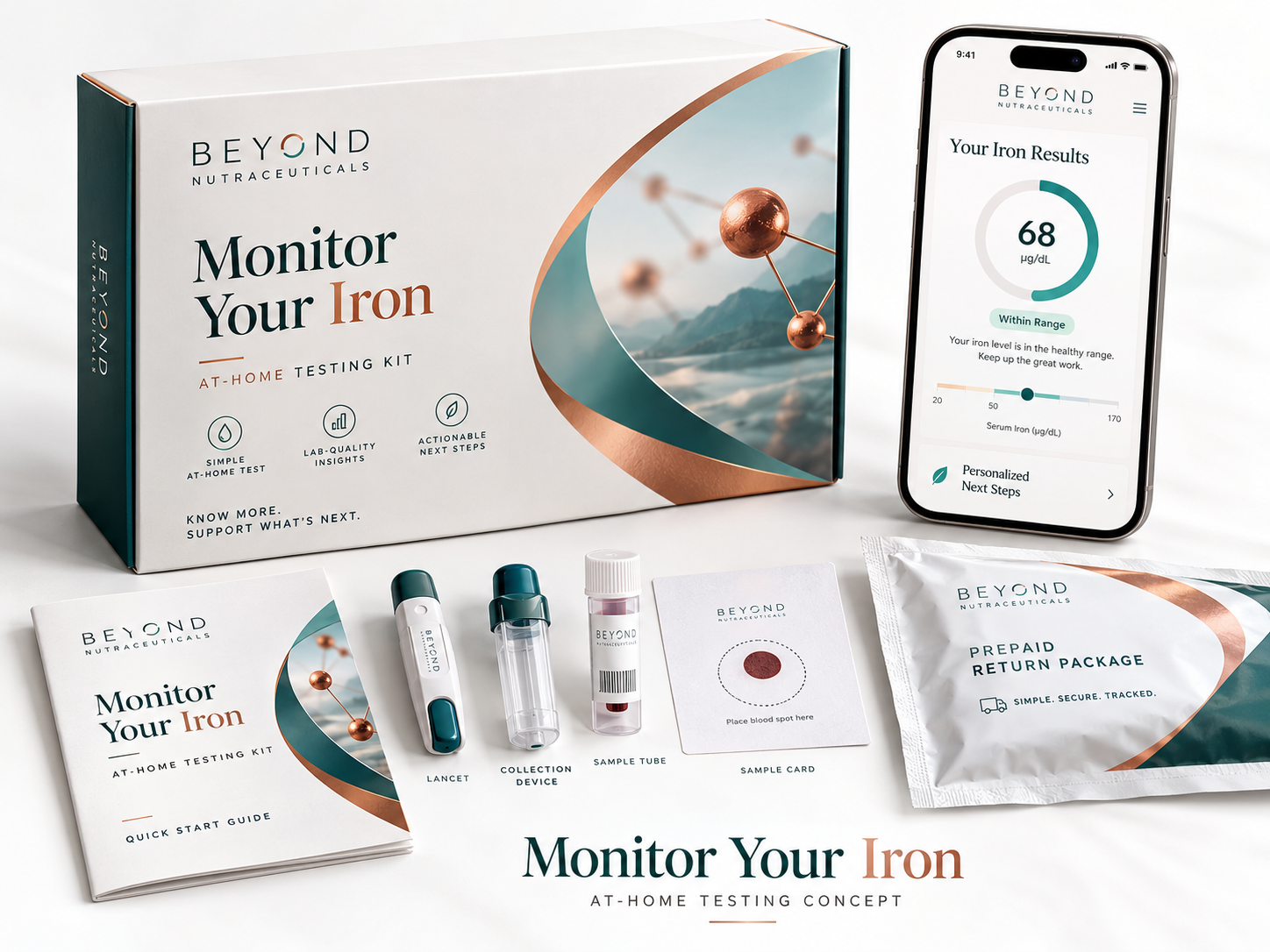
Beyond Monitor Your Iron at-home testing kit concept: branded box, quick start guide, lancet, collection device, sample tube, sample card, prepaid return package and a phone showing sample results
Illustrative concept—not an available test service. Kit contents, sampling items, return mailer and phone results are mockups; no provider, panel or dashboard is confirmed.

Future at-home monitoring concept

Monitor Your Iron

An idea for connecting iron testing with informed follow-up. Provider details and validation are still to come.

Product concepts; monitoring kit availability to be announced. Product information is separate from study participation.

Beyond Iron+ · Research, not assumptions

Why Beyond starts with iron.

Iron gives nutrient delivery research a focused question. Beyond is studying phosvitin-derived phosphopeptides as a formulation approach, informed by laboratory observations in an intestinal-cell model.

Those observations do not establish improved human absorption or benefit for Beyond Iron+. Product-specific human studies are planned; study design and required approvals remain part of that work.

Research note: Feng & Mine · iron uptake in cells

An invitation to connect about a planned study, not study enrollment.

Women + Iron Study

Interested in taking part?

We're planning research into iron delivery and women's health. Leave your email to hear from Beyond as study details become available.

No health information is collected. Any future study will have its own eligibility and consent steps. To withdraw, email theo@indy.fund.

Curiosity is a good starting point

Better questions. More informed choices.

Ask what you need, what was measured and what the evidence actually supports. The goal is understanding—not a louder promise.

Educational information, not personal medical advice. Photography illustrates everyday life; the people shown are not identified as patients, study participants or endorsers.

Photographs used under the Pexels and Unsplash licenses. Photographer credits accompany each image.

Research & sources

Dietary references: Health Canada — Dietary Reference Intakes (elements)·NIH Office of Dietary Supplements — Iron Fact Sheet

Data sources & clinical context